Your screening tool is generating alerts and your team is reviewing them. From the outside, the system looks like it’s doing its job. The problem is the failures you can’t see. The ones that don’t produce an alert. They produce…
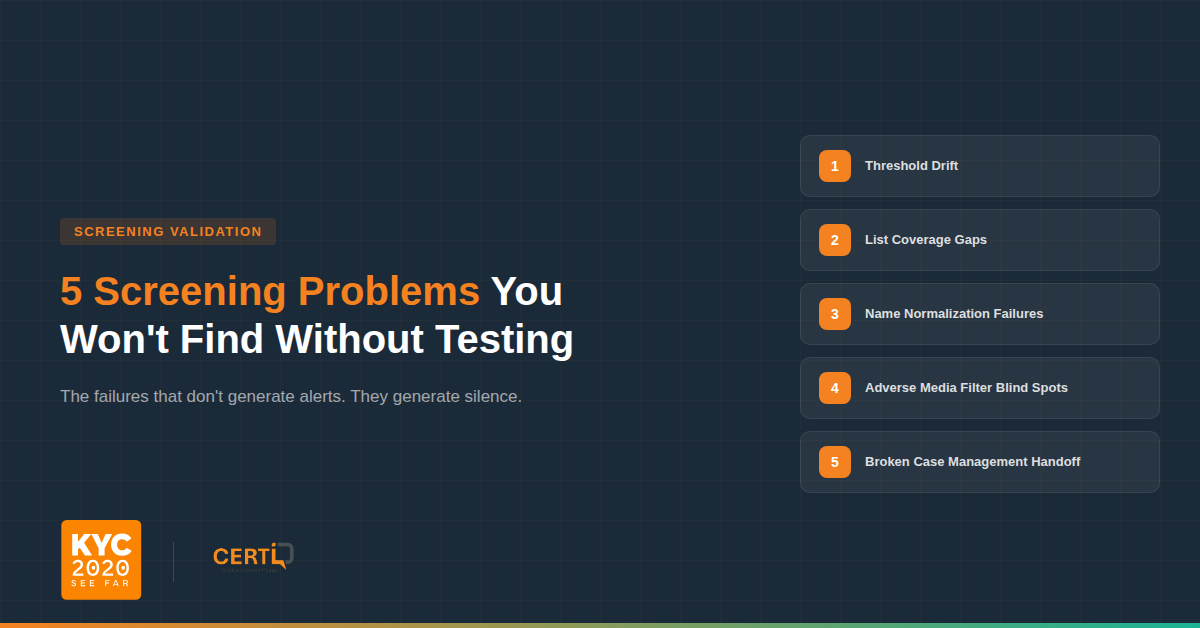

Your screening tool is generating alerts and your team is reviewing them. From the outside, the system looks like it’s doing its job. The problem is the failures you can’t see. The ones that don’t produce an alert. They produce…
If you are evaluating AML screening vendors right now, you are not short on options. The market has more providers than it did even two years ago. But more options does not mean the decision is easier. Compliance teams are…
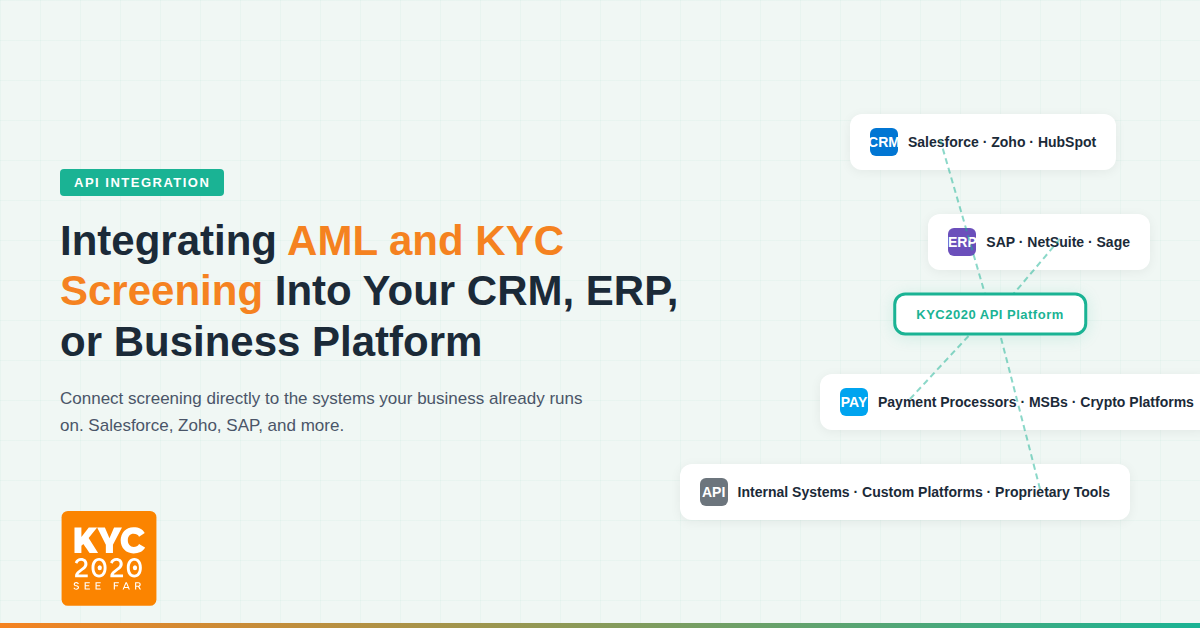
One of the most common questions we get from businesses evaluating screening solutions is whether our platform can connect to the tools they already use. Their customer data lives in Salesforce, Zoho, HubSpot, or an internal system. Their onboarding happens…
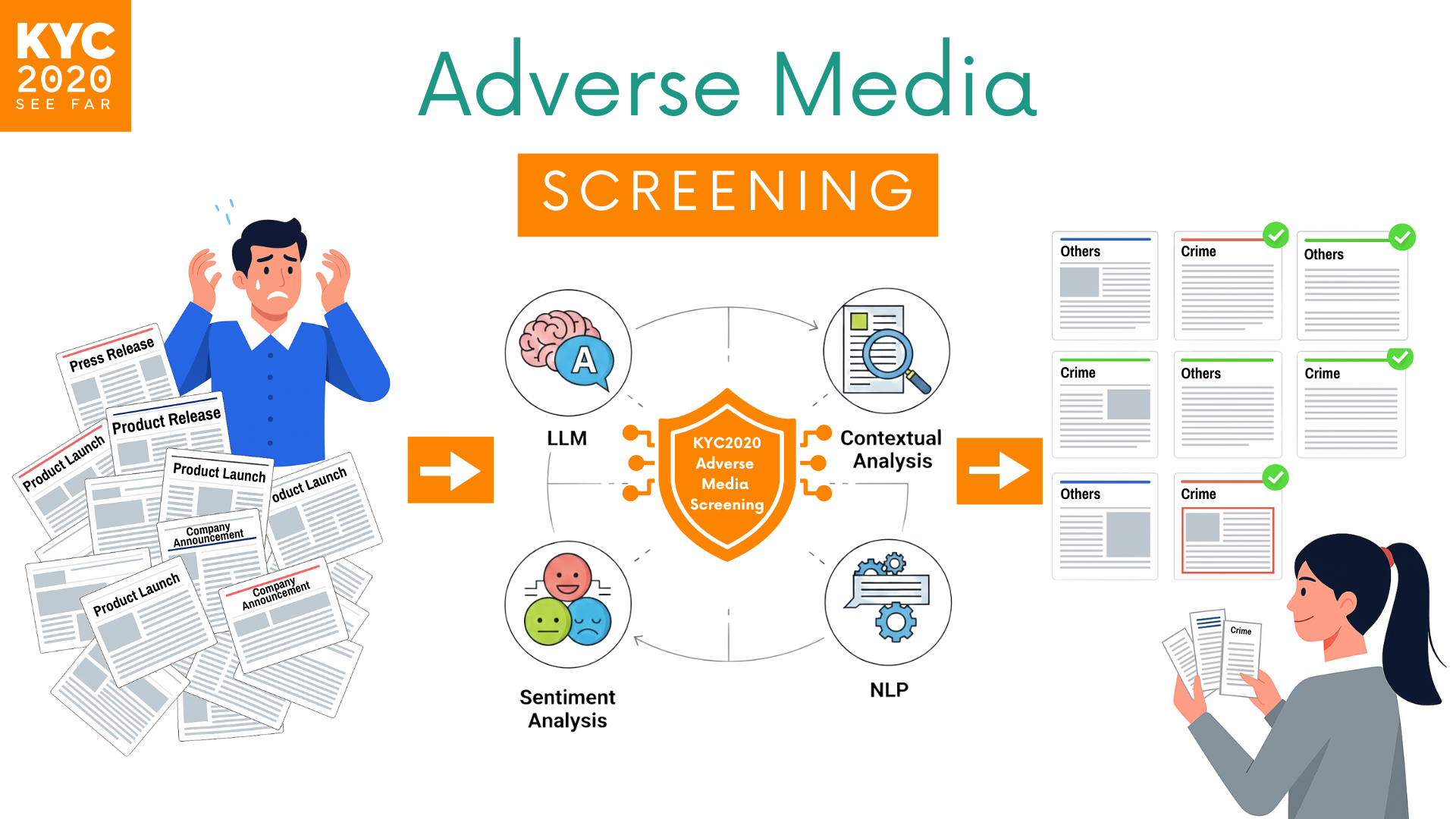
Adverse media or negative news screening has long been one of the most challenging aspects of AML Screening. While essential for uncovering risks tied to individuals or entities, it often creates major inefficiencies: too many false positives clutter review and…
AML compliance isn’t just about getting the risk signals right, it’s about handling sensitive data with the same care you bring to financial crime detection. At KYC2020, we treat data privacy and security not as checklist items, but as core…

Section 314(a) of the USA PATRIOT Act is a regulatory mechanism that fosters cooperation between Financial Institutions (FIs) and Law Enforcement (LE) in the fight against financial crime, money laundering, and terrorist financing. Administered by the Financial Crimes Enforcement Network…

In today’s rapidly evolving regulatory landscape, the challenge of maintaining compliance with anti-money laundering (AML) and counter-terrorism financing (CTF) regulations has never been more daunting. The requirements to monitor sanctions, politically exposed persons (PEPs), criminal convictions, and adverse media, as…
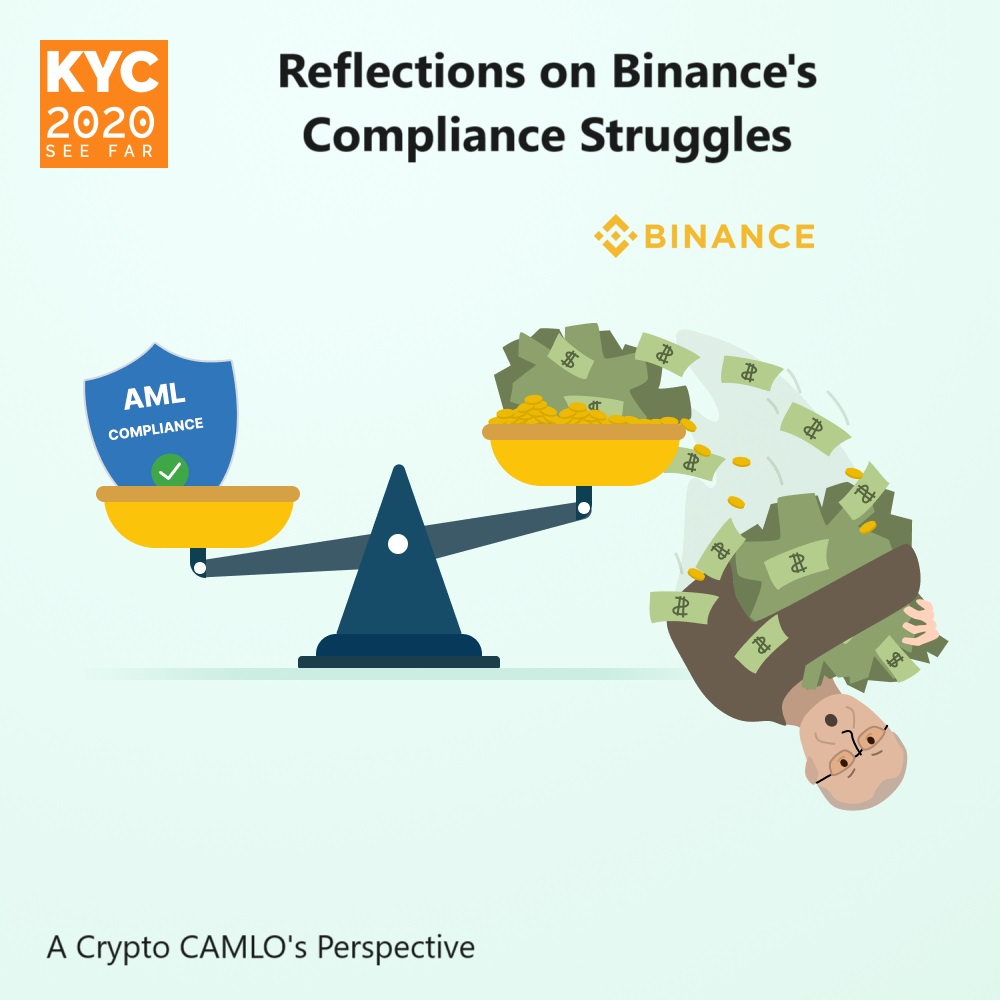
Understanding the Gravity of the Situation After just coming off an almost 6-year jaunt as CAMLO for a major crypto exchange and being in the trenches of AML and ATF programs all that time, I’ve seen my fair share of…
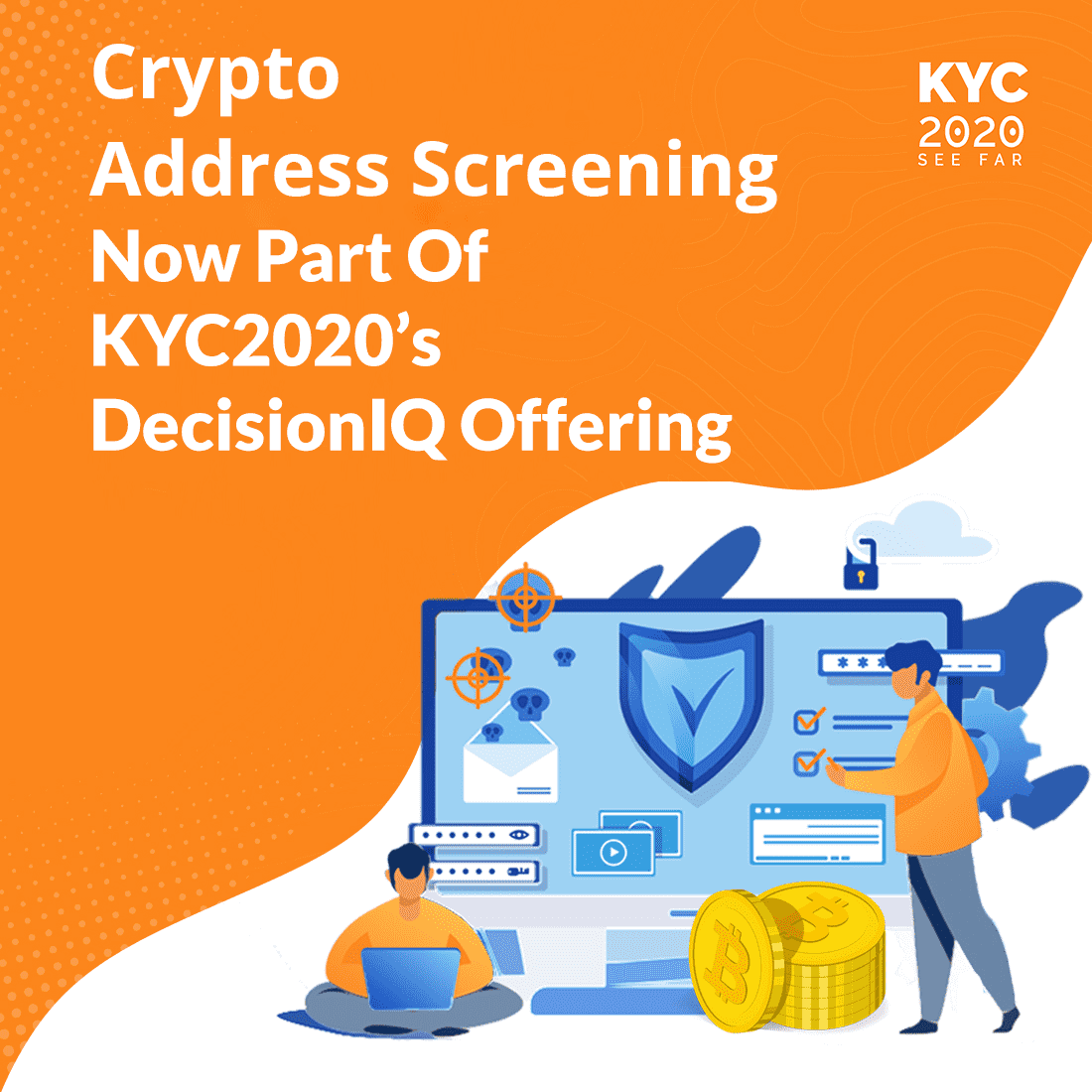
Did you know that despite the market capitalization of cryptocurrency peaking at $3 trillion it continues to surpass over $1 billion daily? With such volatility, growth, and potential, money laundering and terrorist financing mirror the same risks as the traditional…

For Anti-Money Laundering (AML) and Know Your Customer (KYC) compliance, Politically Exposed Persons (PEPs) emerge as pivotal threads that demand careful handling. These individuals wield substantial influence, and without the right approach, they can introduce significant risks to the financial…